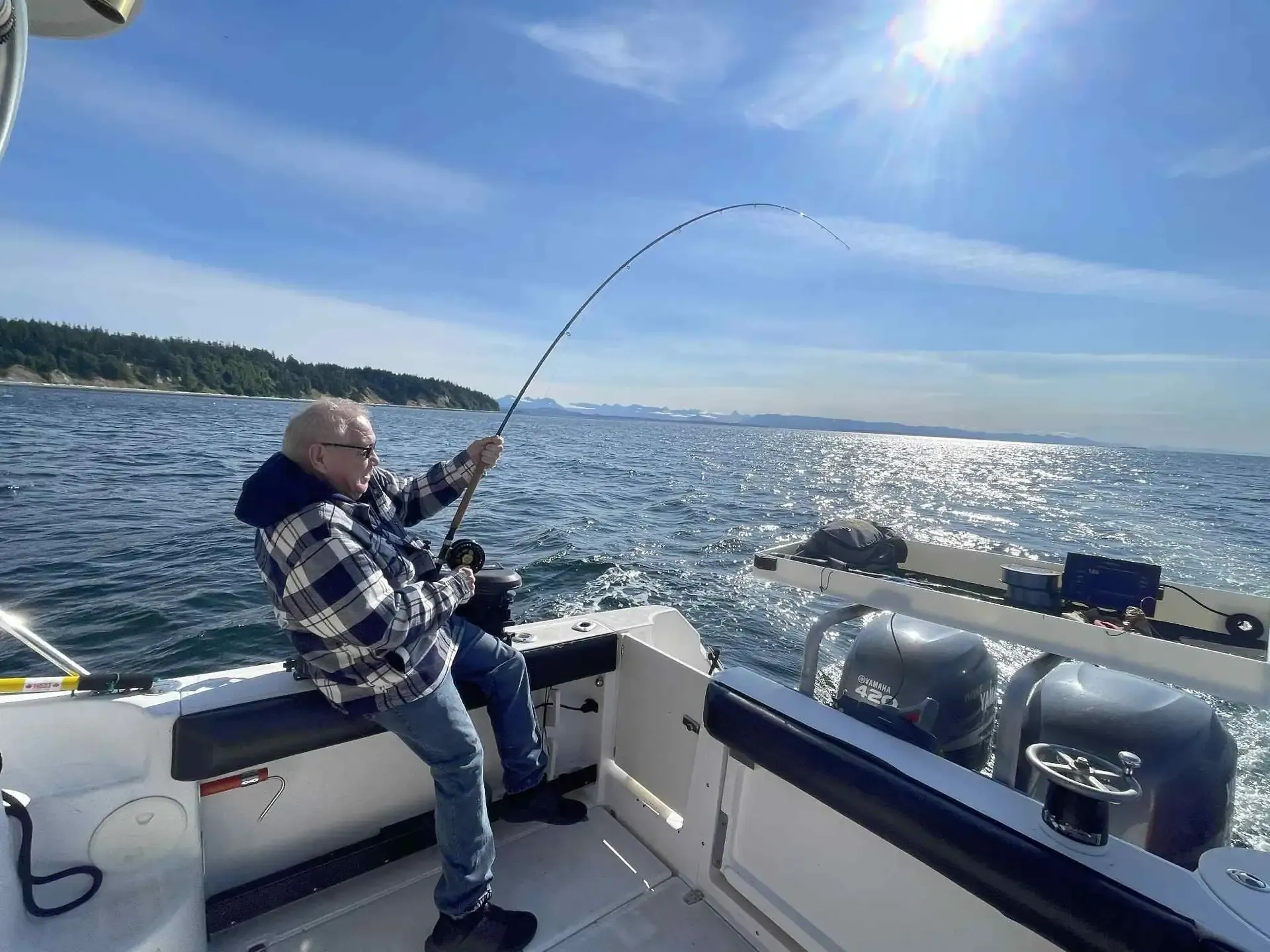
Campbell River earns its "Salmon Capital of the World" designation not just because of fish quantity, but because of the unique conditions that make multiple fishing techniques effective. Whether you're trolling with downriggers at dawn, mooching through a tide change, or jigging structure for aggressive feeders, understanding the fundamentals of each technique transforms you from passenger to participant.
After guiding these waters for 18+ years, I've seen how anglers who understand why we're using specific techniques catch more fish, have more fun, and develop genuine fishing skills that transfer to other waters. This guide breaks down the primary salmon fishing techniques used in Campbell River, explaining not just the mechanics but the reasoning behind them.
Why Campbell River Fishing Is Unique
Before diving into specific techniques, it's important to understand what makes Campbell River different from other salmon fisheries.
The Discovery Passage Ecosystem
Campbell River sits at the northern end of the Strait of Georgia, where it narrows into Discovery Passage. This relatively confined waterway connects the protected Inside Passage to the open Pacific through Seymour Narrows—one of the most powerful tidal rapids in the world.

Twice daily, massive volumes of water surge through this constriction at speeds exceeding 15 knots. This tidal exchange creates several crucial conditions:
- Nutrient upwelling: Strong currents bring nutrient-rich deep water to the surface, fueling phytoplankton blooms
- Baitfish concentration: Herring, anchovies, and needlefish congregate to feed on plankton
- Salmon aggregation: Predatory salmon gather to feast on concentrated baitfish
- Predictable patterns: Tidal currents create consistent fish-holding structure and feeding zones
Multiple Salmon Species
Unlike single-species fisheries, Campbell River hosts overlapping runs of Chinook (king), Coho (silver), Pink, and Sockeye salmon throughout the year. This diversity means different techniques often work better for different species—and sometimes we're targeting multiple species on the same trip.
Accessible Productive Water
One of Campbell River's greatest assets is that premier fishing grounds lie just 10-20 minutes from the marina. You're not burning hours and fuel to reach fish—you're fishing productive water within minutes of departure. This allows us to try different techniques, move between spots, and adapt to changing conditions without wasting half the trip traveling.
Technique #1: Trolling with Downriggers
Downrigger trolling is the most commonly used salmon technique in Campbell River, accounting for 80%+ of our guided trips. It's productive, relatively easy to learn, and effective for both Chinook and Coho.
How Downrigger Trolling Works
The concept is simple: we need to get bait or lures down to the depth where salmon are feeding (typically 40-120 feet in Discovery Passage), but we want you to fight the fish without also fighting a heavy weight.
Here's the setup:
- A fishing line with bait or lure is let out behind the boat 20-50 feet
- The fishing line is clipped to a release mechanism attached to a heavy weight (the downrigger ball—usually 10-12 pounds)
- The downrigger cable lowers the ball (and your attached fishing line) to the desired depth
- The boat slowly trolls (1.5-3.5 mph typically) through productive water
- When a salmon strikes, the force pops your fishing line free from the release clip
- You fight the fish on your fishing rod with no weight attached—just you and the salmon
Why Downriggers Are Effective
Salmon are depth-specific feeders. They don't cruise randomly through the water column—they hold at specific depths based on water temperature, bait location, light levels, and current. On any given day, the productive zone might be 60 feet deep... or 95 feet... or 45 feet. Without downriggers, you're guessing. With downriggers, we know exactly where your bait is running.
Downriggers also allow precise depth adjustments. If we catch a fish at 70 feet, we can put every rod at exactly 70 feet. If that depth stops producing, we adjust all rods to 85 feet in minutes. This precision dramatically improves catch rates.
Reading the Fish Finder
Modern fish finders show us incredible detail: bottom structure, bait schools, individual fish, water temperature at various depths, and thermoclines. When you see your captain staring at the screen and adjusting downrigger depths, we're reading what the electronics tell us and placing baits accordingly.
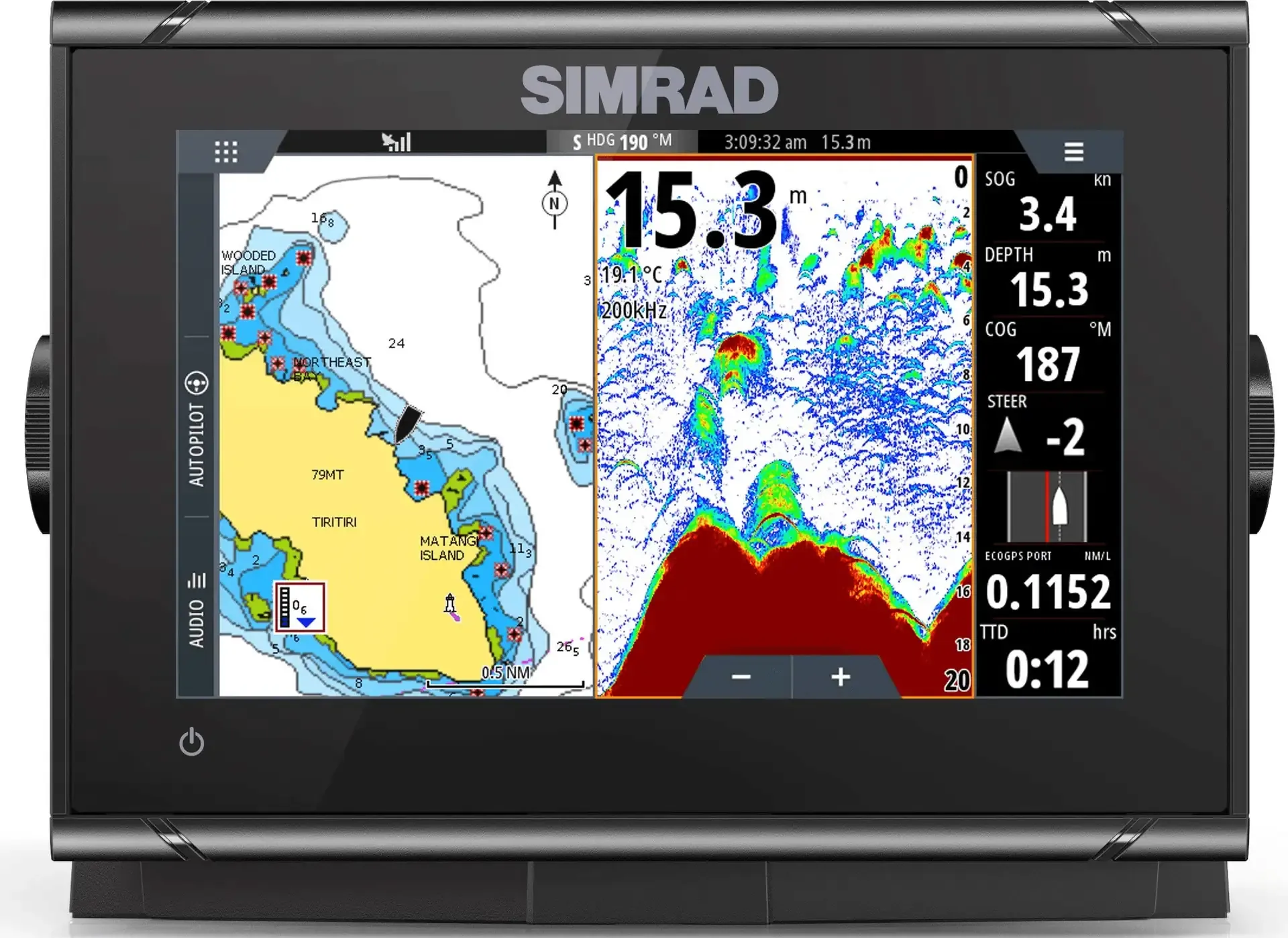
You'll often hear guides say, "There's a good ball of bait at 65 feet with marks above it." This means we're seeing a school of herring or anchovies, with larger marks (salmon) positioned to feed on them. That's where we want our baits.
Trolling Speed and Direction
Salmon don't just want the right depth—they want the right presentation speed. Too fast and they won't chase. Too slow and the lure or bait looks dead. The ideal speed varies by species, technique, and conditions, but generally:
- Chinook salmon: 1.8-2.5 mph (slower, larger profile baits)
- Coho salmon: 2.5-3.5 mph (faster, more aggressive presentations)
- Pink salmon: 2.0-3.0 mph (mid-range speeds)
We also consider direction relative to tidal current. Trolling with the current (downtide) allows faster over-ground speeds while maintaining slower bait speeds through the water. Trolling against current (upcurrent) means slower over-ground speeds but faster bait presentation. Both techniques work in different situations.
Flashers and Attractors
Most downrigger setups include a flasher—a large metallic blade that rotates as it's pulled through the water. Flashers serve multiple purposes:
- Visual attraction: The rotating blade creates flashes of reflected light visible to salmon from considerable distances
- Vibration: The spinning action creates water disturbance that salmon sense through their lateral line
- Bait action: The flasher's rotation imparts swimming action to the bait or lure trailing behind it
Flasher selection matters. Different sizes, colors, and blade patterns work better under different conditions. Bright, highly reflective flashers work well in darker water or low light. Subdued finishes excel in clear water or bright sunshine. Your captain is constantly making these micro-adjustments based on conditions.
Bait and Lure Choices
Behind the flasher runs either bait (cut-plug herring or whole anchovies) or artificial lures (hoochies, spoons, or plugs).
Cut-Plug Herring
This is the gold standard for Chinook salmon in Campbell River. A whole herring is cut at an angle behind the head, rigged with two hooks, and the angled cut creates a tight, spinning action when trolled. The combination of natural scent, realistic appearance, and attractive action is deadly on Chinook.
Fresh herring is crucial—we buy it daily or brine our own for optimal toughness and scent. Stale bait catches far fewer fish.
Hoochies (Squid-Style Lures)
These rubber squid imitations come in endless color combinations and work well for both Chinook and Coho. Hoochies have several advantages: they're durable (one lure lasts multiple fish), produce vigorous action, and certain color patterns trigger aggressive strikes.

Color selection varies by conditions. Glow-in-the-dark patterns work well in deep water or low light. Natural colors (green, blue, white) excel in clear water. Bright colors (pink, chartreuse, orange) shine in stained water or active feeding situations.
Spoons
Metal spoons wobble erratically when trolled, imitating injured baitfish. Coho salmon find spoons particularly irresistible. The irregular flash and vibration trigger predatory instincts.
When Downrigger Trolling Shines
- Covering large areas to locate active fish
- Fishing specific depth zones where salmon are holding
- Targeting Chinook salmon (their preferred technique)
- Fishing with beginners (technique is straightforward to learn)
- Weather conditions that make other techniques difficult
Technique #2: Mooching
Mooching is a more traditional Pacific Northwest technique that predates downriggers by decades. While less common than trolling on modern charters, mooching remains effective and offers a more engaged fishing experience.
How Mooching Works
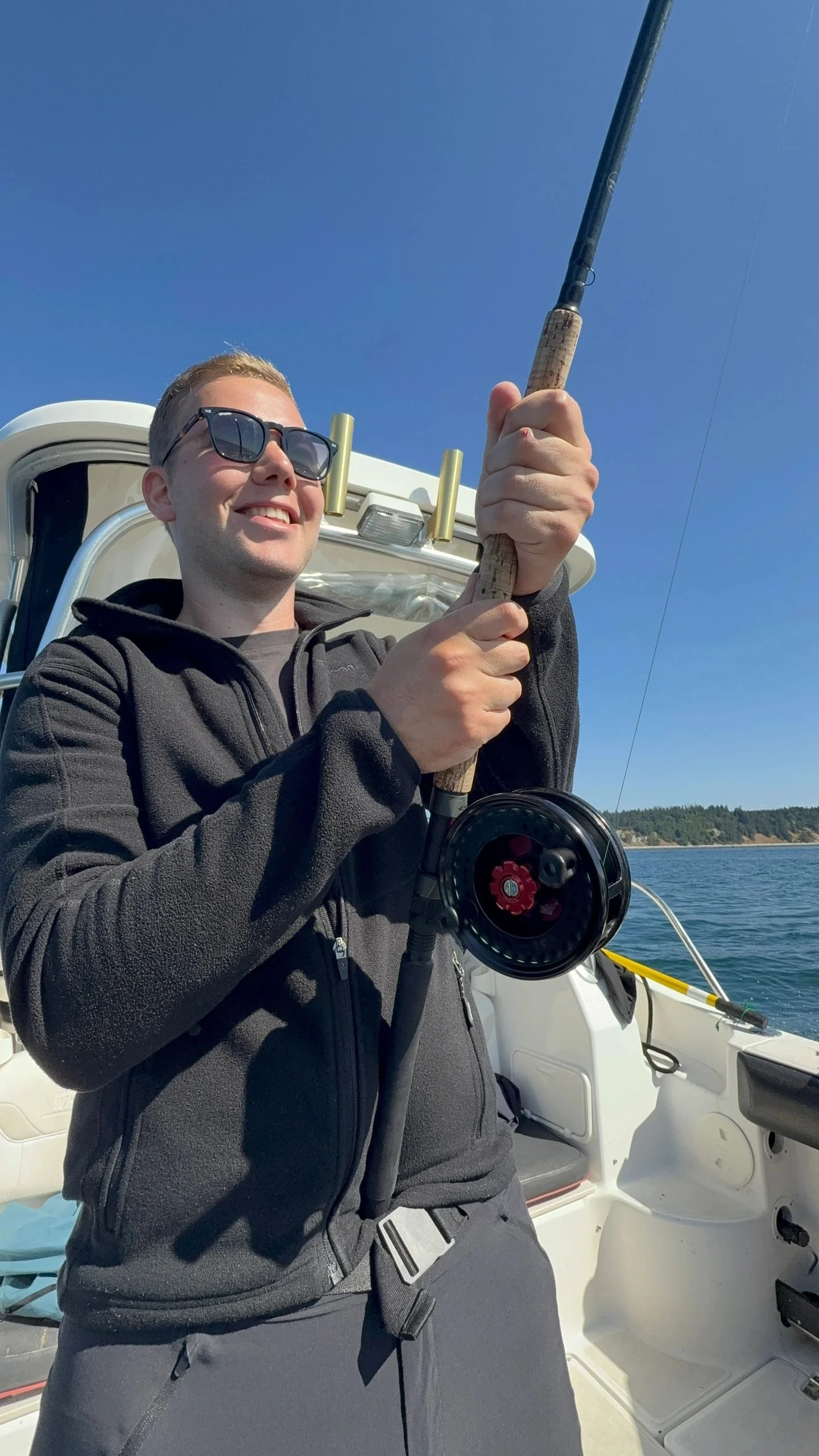
Mooching uses a sliding sinker rig with live or cut herring. Here's the approach:
- Bait (typically whole herring or cut-plug herring) is rigged on specialized mooching hooks
- A sliding sinker (2-6 ounces depending on depth and current) is threaded on the main line above the leader
- The baited rig is lowered to the desired depth (sometimes near-bottom, sometimes mid-water column)
- The boat drifts with wind and current, or motors very slowly
- The angler works the rod with gentle lifts and drops, imparting swimming action to the bait
- When a salmon strikes, the sliding sinker allows the fish to take line without immediately feeling heavy resistance
Why Mooching Works
Mooching excels in situations where salmon are not actively feeding and won't chase fast-moving trolled baits. The slow, natural presentation of drifting bait triggers bites from cautious fish. It's particularly effective during:
- Slack tide periods when current is minimal
- Times when salmon are holding on structure rather than roaming
- Situations where fish are feeding on specific bait schools in confined areas
- Cold water periods when salmon metabolism slows
The Mooching Cadence
Unlike trolling where the boat provides all the action, mooching requires the angler to work the rod. The classic mooching rhythm involves:
- Lower the bait to the target depth (counting seconds as line goes out)
- Gently lift the rod tip 2-3 feet
- Lower the rod tip back down, feeling for the weight to touch bottom or return to depth
- Reel in any slack line
- Pause briefly
- Repeat
This lift-drop-pause sequence imitates a wounded or disoriented baitfish—an easy target that salmon find difficult to resist.
Detecting Mooching Strikes
Mooching strikes feel different than trolling strikes. Instead of a rod-bending slam, you often feel a subtle "tick-tick" or increased weight as you lift the rod. Sometimes the line simply goes slack as the fish swims toward you. Any change in the normal rhythm means set the hook immediately.
This is why mooching is more engaged than trolling—you're in constant contact with your bait, reading every signal the rod transmits.
When Mooching Shines
- Slack tide periods (30 minutes before and after tide change)
- Fishing specific structure (rockpiles, ledges, steep drop-offs)
- Targeting trophy-sized Chinook that aren't actively feeding
- Situations where you've marked fish on the sounder but they won't hit trolled baits
- Experienced anglers who want more active involvement in the technique
Technique #3: Jigging
Jigging is the most active salmon technique, requiring constant angler input but often triggering aggressive reaction strikes.
How Jigging Works
Jigging uses heavy metal lures (typically 3-7 ounces) that sink quickly to the target depth. The angler then works the jig with sharp upward rod strokes followed by controlled drops, creating an erratic darting action that imitates fleeing baitfish.
The technique:
- Drop the jig to the bottom or target depth
- Sharply snap the rod upward 3-5 feet
- Immediately lower the rod while reeling in slack
- Repeat continuously
Most strikes occur on the drop as the jig flutters downward. You'll feel a solid thump or see your line angle off—set the hook hard.
Why Jigging Works
Jigging triggers predatory instinct rather than feeding behavior. The fast, erratic action mimics a baitfish desperately trying to escape—something salmon are hardwired to attack even when not actively feeding. This makes jigging effective for aggressive Coho and summer Chinook in feeding mode.
Jig Selection
Modern salmon jigs come in two main styles:
Vertical Jigs
Heavy, slim metal jigs designed to sink fast and flutter on the drop. These work well in deep water or strong current where you need to get down quickly and maintain vertical contact.
Casting Jigs
Slightly lighter jigs that can be cast away from the boat and retrieved with a jigging motion. Effective when fish are spooky or holding off structure.
Color selection follows similar principles to other lures: natural colors in clear water, bright colors in stained water, glow patterns in low light or deep water.
When Jigging Shines
- Targeting aggressive Coho salmon
- Fishing vertical structure (rock walls, underwater pinnacles)
- Situations where fish are deep and actively feeding
- Times when you've marked fish on the sounder at specific depths
- Experienced anglers who want maximum involvement
Physical Demands
Jigging is the most physically demanding salmon technique. Continuously working a heavy jig for hours provides a genuine arm workout. For this reason, we typically jig for portions of trips rather than entire charters, or recommend it for younger, more physically capable anglers.
Understanding Tides and How They Affect Technique
No discussion of Campbell River fishing techniques is complete without understanding tidal influence. Tides don't just raise and lower water levels—they fundamentally change where fish hold and how they feed.
The Tidal Cycle
Campbell River experiences semi-diurnal tides—two high tides and two low tides daily, occurring roughly 6 hours apart. The period between high and low tide is called the "ebb" (outgoing), and the period between low and high is the "flood" (incoming).
But it's the current speed that matters most for fishing, not the height of the tide. Current is slowest at high and low tide (called "slack tide") and fastest midway between (called "peak ebb" or "peak flood").
How Current Affects Fishing
Slack Tide (30 minutes before and after tide change)
- Current: Minimal to zero
- Fish behavior: Often lethargic, holding on structure
- Best technique: Mooching with slow presentations
- Challenges: Fewer fish actively feeding
Building Current (1-2 hours after tide change)
- Current: Increasing, 1-3 knots
- Fish behavior: Beginning to feed actively as current brings bait
- Best technique: Trolling at moderate speeds
- Advantages: Fish start moving and feeding
Peak Current (3-4 hours after tide change)
- Current: Maximum, 3-6+ knots in some areas
- Fish behavior: Aggressive feeding on bait pushed by current
- Best technique: Trolling or jigging in current seams and eddies
- Advantages: Often the best bite of the day
Dying Current (1 hour before tide change)
- Current: Decreasing, 1-2 knots
- Fish behavior: Last feeding push before slack
- Best technique: Any technique can work
- Advantages: Fish know current is ending and feed aggressively
Reading Current
Your captain is constantly reading current by watching water movement, drift speed, and GPS ground track. We're positioning the boat relative to current to control bait speed and presentation. When you hear us talk about "fishing the edge," we're working the boundary between fast current and slower water—a prime ambush zone for feeding salmon.
Depth, Temperature, and Light
Beyond technique selection, three additional factors determine success:
Depth
Salmon in Campbell River are usually found between 40-120 feet deep, but the specific depth varies daily based on multiple factors. We're constantly adjusting based on where we mark fish and bait on the sounder. When catches concentrate at a specific depth (say, 75 feet), all rods move to that zone.
Water Temperature
Salmon prefer water temperatures between 50-56°F. Our fish finders display temperature at various depths, allowing us to find the thermocline (the zone where temperature changes rapidly with depth). Baitfish often concentrate at thermoclines, and salmon gather to feed on them.
When surface temperatures exceed 60°F in summer, salmon go deeper to find cooler, more oxygenated water. When surface temperatures drop below 48°F in winter, they may come shallower. Temperature dictates depth more than any other single factor.
Light Levels
Salmon are more active in low light conditions—dawn, dusk, overcast days, or deeper water where sunlight penetration is limited. This is why most charters depart early in the morning. The first few hours of daylight often produce the day's best action.
On bright, sunny days, salmon tend to go deeper or become more selective about presentations. We adjust by fishing deeper, using more natural colors, and sometimes slowing presentations.
Putting It All Together: A Typical Campbell River Charter
Understanding individual techniques is valuable, but here's how they combine on an actual fishing trip:
6:30 AM - Departure
We depart Discovery Harbour Marina as dawn breaks. Tide is beginning to flood (incoming), with 2 hours until peak current. Water temperature is 54°F at the surface. Our plan: troll with downriggers through the building current.
6:45 AM - First Lines In
We've run to a productive ledge off Cape Mudge. The fish finder shows bait at 65 feet with larger marks (salmon) above and below. We set downriggers at 55, 65, 75, and 85 feet, covering the zone. Two rods run cut-plug herring behind flashers, two run hoochies.
7:15 AM - First Strike
The rod running a green/glow hoochie at 65 feet bends hard—a Chinook has hit. After a powerful 8-minute fight, we net a beautiful 22-pound Chinook. We reset that rod at exactly 65 feet—the hot depth.
7:30-9:00 AM - Steady Action
Current builds to peak, and the bite turns on. We land 4 more Chinook and 2 Coho over the next 90 minutes, all at depths between 60-75 feet. The herring baits are outperforming hoochies 2:1, so we switch all rods to herring.
9:15 AM - Current Beginning to Slow
As current approaches slack, the bite slows. We see fish on the sounder but trolling isn't getting strikes. Time to adapt: we switch to mooching, drifting the same area with fresh herring on mooching rigs.
9:45 AM - Mooching Success
The slower, more natural presentation triggers two more Chinook strikes during the slack tide period. One fish goes 28 pounds—the largest of the day.
10:30 AM - Current Building Again
The flood tide is now ebbing (reversing to outgoing). Current picks up, and we resume trolling, this time in the opposite direction to maintain proper bait speed relative to current direction.
11:45 AM - Final Fish
We land two more Coho on the troll back toward the marina, ending the trip with 9 salmon landed—well above the average and close to daily limits for the group.
Technique Breakdown
This 6-hour trip used two techniques (trolling and mooching), three bait types (cut-plug herring, hoochies, whole herring), multiple depths (55-85 feet), and constant adjustments based on current, fish location, and bite patterns. That's typical for productive Campbell River fishing—adaptation based on conditions.
Learning from Your Captain
The most valuable part of any fishing charter is learning from your guide. Don't just passively fish—ask questions:
- "Why are we fishing this depth?"
- "How do you know when to change techniques?"
- "What are you seeing on the fish finder?"
- "Why did you choose this lure color?"
- "How does tide affect where fish hold?"
Good guides love sharing knowledge. Every question helps you understand not just what we're doing but why—transforming you from passenger to student.
Beyond Techniques: Conservation and Respect
Understanding fishing techniques also means understanding conservation. Pacific salmon are a precious resource that requires responsible management.
Catch and Release Best Practices
When releasing salmon:
- Fight fish efficiently—don't play them to exhaustion
- Keep fish in the water whenever possible
- Use barbless hooks for easier, less damaging releases
- Handle fish with wet hands only
- Support the body horizontally, never vertically by the jaw
- Revive exhausted fish by holding them upright in moving water until they swim away strongly
Selective Harvesting
You don't have to keep every legal fish. Consider:
- Keeping smaller fish (15-20 pounds) for better table quality
- Releasing large fish (30+ pounds)—these are prime spawners
- Bonking fish immediately if keeping (don't let them suffer in a live well)
- Bleeding and icing fish immediately for best meat quality
Our goal is sustainable fishing that provides excellent experiences today while ensuring healthy salmon runs for future generations.
Ready to Put These Techniques Into Practice?
Reading about fishing techniques is valuable, but nothing replaces hands-on experience with knowledgeable guides. Our captains have spent decades mastering these techniques in Campbell River's unique waters, and we're passionate about sharing that knowledge with anglers.
Whether you're a complete beginner or experienced angler looking to improve your salmon fishing skills, a guided charter provides the perfect learning environment. You'll see techniques in action, understand why we make specific decisions, and develop genuine fishing skills that translate to future trips.
Explore our complete salmon fishing guide for more detailed information about Campbell River salmon fishing, or check our rates and availability to book your trip.
Questions about techniques or which trip type is right for your skill level? Call us at 250-202-8324 or email jason@fishingstoriecharters.com. We're always happy to discuss fishing and help you plan the perfect Campbell River experience.
Tight lines and we'll see you on the water!
Captain Jason Storie
Fishing Storie Charters
Discovery Harbour Marina, Campbell River, BC
jason@fishingstoriecharters.com