Campbell River Fishing: The Complete Guide
Everything you need to know about fishing in the Salmon Capital of the World - from species and seasons to techniques and top spots.
Campbell River, British Columbia, isn't called the "Salmon Capital of the World" by accident. For over a century, anglers from around the globe have traveled to this picturesque Vancouver Island community to experience some of the finest salmon fishing on the planet. Whether you're a seasoned angler or picking up a rod for the first time, Campbell River offers an unparalleled fishing experience that combines abundant fish populations, breathtaking coastal scenery, and rich maritime heritage.
This comprehensive guide covers everything you need to know about fishing in Campbell River - from understanding the five species of Pacific salmon that run through these waters to choosing between a guided charter and DIY fishing, knowing the best times to visit, and learning the techniques that produce results in these nutrient-rich waters.
Why Campbell River is the "Salmon Capital of the World"
The unique geography and ocean conditions make Campbell River one of the most productive salmon fishing destinations on Earth.
Perfect Geographic Location
Campbell River sits at the confluence of two major marine ecosystems where the Strait of Georgia meets Discovery Passage. This narrow, deep channel creates a natural funnel that concentrates migrating salmon as they move between feeding grounds and spawning rivers.
The powerful tidal currents through Seymour Narrows - some of the strongest in the world - mix nutrient-rich waters and create ideal feeding conditions for baitfish, which in turn attracts massive schools of salmon. Learn more about Discovery Passage fishing and the unique conditions that make these waters legendary.
Abundant Salmon Runs
All five species of Pacific salmon migrate through Campbell River waters: Chinook (King), Coho (Silver), Sockeye (Red), Pink (Humpy), and Chum (Dog). The diversity and sheer numbers of returning salmon create a fishing season that extends from May through October, with peak action in July and August.
The legendary Tyee Pool near Cape Mudge Lighthouse has produced Chinook salmon over 70 pounds, and 30+ pound Tyee are caught regularly throughout the summer months.
Rich Fishing Heritage
The Campbell River Tyee Club, founded in 1925, established the region's reputation as a world-class fishing destination. The club's strict rules - Tyee salmon (30+ lbs) caught using specific traditional methods - created a legacy of sporting excellence that continues today.
Legendary angler and author Roderick Haig-Brown made Campbell River famous through his writings, attracting anglers and celebrities from around the world who came to test their skills against the mighty Chinook salmon.
Year-Round Fishing Opportunities
While salmon fishing peaks in summer months, Campbell River offers productive salmon fishing year-round. Winter Chinook fishing provides action during the quieter months, while Lingcod and rockfish bottom fishing is excellent from May through November (season opens May 1).
Prawn and crab fishing adds another dimension to the fishing experience, with many charters combining salmon fishing with shellfish harvesting for a complete coastal experience.
Pacific Salmon Species in Campbell River
All five species of Pacific salmon migrate through these waters - here's a brief overview of each.
Chinook (King) Salmon
Season: May - October (Peak: July-August)
Size: 15-40+ lbs (Tyee: 30+ lbs)
Identification: Black mouth, spots on tail
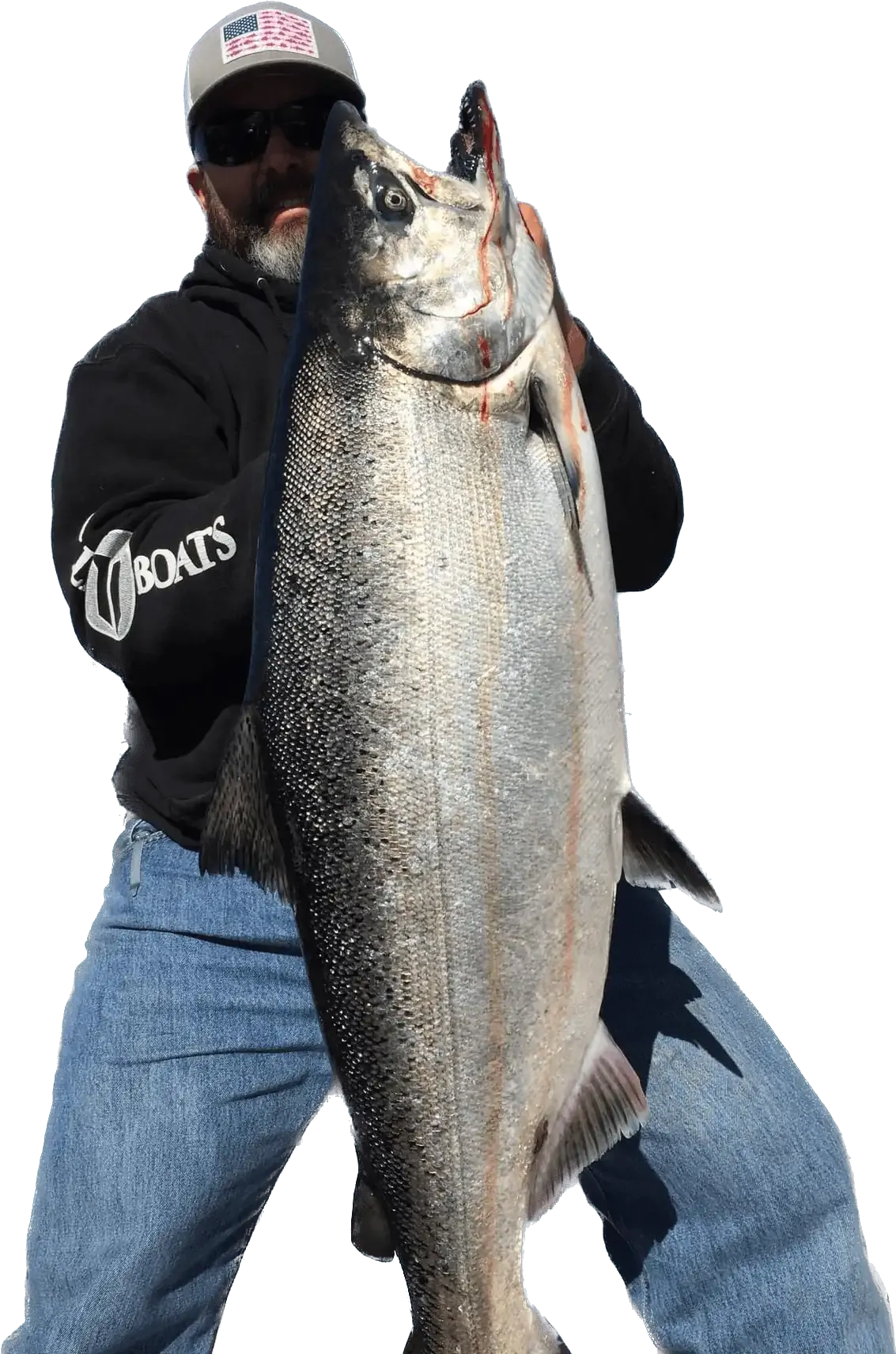
The prized Chinook is the largest and most sought-after Pacific salmon. Known for their powerful fights and excellent eating quality, Chinook are the primary target for most Campbell River anglers.
Coho (Silver) Salmon
Season: July - October (Peak: August-September)
Size: 6-15 lbs
Identification: White mouth, spots on upper tail lobe only
Coho are renowned for their acrobatic fights, often leaping multiple times when hooked. They're aggressive feeders and provide excellent action, especially in late summer and fall.
Sockeye (Red) Salmon
Season: June - August
Size: 5-8 lbs
Identification: No spots on tail, streamlined body
Sockeye are less commonly targeted in Campbell River but pass through in good numbers. They're prized for their deep red flesh and excellent flavor, making them highly valued as table fare.
Pink (Humpy) Salmon
Season: July - September (Odd years stronger)
Size: 3-6 lbs
Identification: Large oval spots on tail, smaller size
Pink salmon run on a two-year cycle, with odd-numbered years producing larger runs. They're the smallest Pacific salmon but provide great light-tackle action and are perfect for beginners.
Chum (Dog) Salmon
Season: August - November
Size: 8-15 lbs
Identification: No spots on tail, vertical bars when spawning
Chum are powerful fighters that arrive later in the season. While often overlooked by anglers, they provide excellent sport on light tackle and are increasingly valued for their caviar.
Want to Learn More?
For detailed information about each salmon species, identification tips, and fishing techniques, check out our comprehensive salmon species guide.
View Salmon Species GuideBest Times to Fish Campbell River
Monthly breakdown of fishing opportunities throughout the year.
| Month | Primary Species | Fishing Quality | Highlights |
|---|---|---|---|
| May | Chinook, Early Coho | Good | Season opener, excellent Lingcod |
| June | Chinook, Coho, Sockeye | Very Good | Chinook runs building, long days |
| July | Chinook, Coho, Sockeye, Pink | Peak Season | Tyee fishing begins, all species present |
| August | Chinook, Coho, Pink, Chum | Peak Season | Peak Tyee season, best overall fishing |
| September | Coho, Chinook, Chum | Very Good | Prime Coho action, fewer crowds |
| October | Coho, Chum | Good | Late-run Coho, fall colors |
| Nov-Apr | Winter Chinook | Fair | Winter fishing, prawning excellent |
Top Fishing Spots Around Campbell River
Local guides know the productive waters - here are some of the legendary fishing grounds.
Discovery Passage
The main waterway between Vancouver Island and Quadra Island, Discovery Passage is where most Campbell River charters spend their time. Strong tidal currents bring nutrients and baitfish, attracting salmon year-round. Multiple productive banks and drop-offs along the passage hold fish at various depths.
Best For: All salmon species, year-round fishing
Tyee Pool (Cape Mudge)
The legendary Tyee Pool near Cape Mudge Lighthouse has produced countless trophy Chinook salmon over 30 pounds. This deep hole with strong currents concentrates large Chinook from July through September. The historic Tyee Club maintains traditional rowboat fishing methods here.
Best For: Trophy Chinook (Tyee), July-September
Seymour Narrows
One of the most powerful tidal rapids in the world, Seymour Narrows is a challenging but productive fishing location. The intense currents require precise timing and expert boat handling, but rewards anglers with excellent Chinook and Coho fishing. Only experienced guides should fish these waters.
Best For: Chinook, Coho - experienced guides only
Willow Point
Just south of Campbell River, Willow Point offers excellent shore-based and boat fishing opportunities. The point creates current breaks and eddies that hold salmon and baitfish. Popular with both local anglers and charter boats, especially during peak summer months.
Best For: Shore and boat fishing, Chinook and Coho
Quadra Island Waters
The waters around Quadra Island offer protected bays, rocky points, and productive reefs. Drew Harbour, Heriot Bay, and the east side of Quadra provide diverse fishing opportunities from salmon to bottom fish. Less fishing pressure than Discovery Passage makes this area attractive.
Best For: Chinook, Coho, Lingcod, rockfish
Middle Bank
Located in the middle of Discovery Passage, Middle Bank is a shallow area that rises from deeper water, creating ideal salmon holding structure. The upwelling currents bring nutrients, and salmon stage here during their migration. Excellent early-season Chinook fishing.
Best For: Early-season Chinook, May-June
Types of Fishing Techniques
Different methods produce results in Campbell River waters - here's what to expect.
Downrigger Trolling
The most common method in Campbell River, downrigger trolling uses weighted cables to precisely control lure depth. Typically using 10-pound lead balls, anglers troll at 2-3 knots in an S-pattern, covering water at depths from 30-200 feet where salmon are holding.
Mooching
A traditional BC fishing technique using cut-plug herring and specialized mooching rods. The boat drifts with the current while anglers work baited hooks in the top 20-50 feet of water. Highly effective for Chinook and Coho, especially during active feeding periods.
Bottom Fishing
Using heavy jigs or baited hooks to target Lingcod and rockfish on rocky reefs and drop-offs. Bottom fishing is excellent from May through November (season opens May 1) and provides great action alongside salmon fishing. Many charters combine salmon and bottom fishing.
Want to Learn Specific Techniques?
Our comprehensive fishing techniques guide covers downrigger setup, flasher and lure selection, mooching methods, reading tides, and the Vancouver Island rod style that produces results.
View Fishing Techniques GuideCharter Fishing vs DIY Fishing
Comparing guided charter fishing with do-it-yourself fishing in Campbell River.
| Consideration | Guided Charter | DIY Fishing |
|---|---|---|
| Local Knowledge | ✓ Expert guides know productive spots, tides, and techniques | ✗ Requires research, trial and error, local information |
| Equipment | ✓ All tackle, rods, lures, and safety gear provided | ✗ Must purchase or rent specialized gear ($1,000-5,000) |
| Boat | ✓ Premium boats with electronics, downriggers, comfort | ✗ Need boat rental ($300-500/day) or own boat |
| Success Rate | ✓ High catch rates - guides find fish consistently | △ Variable - depends on experience and conditions |
| Learning | ✓ Guides teach techniques, answer questions, provide tips | ✓ Learn through personal experience and experimentation |
| Cost (Full Day) | $1,680 for up to 4 people ($420/person) | $500-800+ (boat, gear, gas, licenses) |
| Convenience | ✓ Show up, fish, guides handle everything else | ✗ Arrange boat, gear, bait, navigation, fish cleaning |
| Best For | Visitors, families, guaranteed results, learning | Experienced anglers, locals, budget-conscious, independence |
For most visitors and first-time Campbell River anglers, a guided charter provides the best experience, highest success rate, and excellent value. You can fish multiple days DIY after learning from a guide on your first trip.
View Charter RatesFishing Regulations Overview
Understanding BC tidal water fishing regulations ensures legal, sustainable fishing.
License Requirements
All anglers over 16 years old must hold a valid BC Tidal Waters Sport Fishing License. Licenses are available online through the Department of Fisheries and Oceans (DFO) website or from local retailers. You can display your license digitally using the free FishingBC App.
Purchase Your License:
DFO Tidal Waters License PortalDaily Limits & Retention
Daily catch limits vary by species and area. Campbell River is in Area 13 (Strait of Georgia - North). Limits change seasonally and are subject to updates based on conservation needs. Always check current regulations before fishing.
General Limits (Subject to change):
- Chinook: Typically 2 per day (check for size restrictions)
- Coho: 2 per day (varies seasonally)
- Combined daily limit: 4 salmon total
- Lingcod: 1 per day (check seasonal closures)
⚠ Regulations Change Frequently
Always verify current limits and closures at DFO Pacific Region website before fishing.
Conservation & Ethics
Campbell River charter operators follow sustainable fishing practices and encourage catch-and-release when appropriate. Proper fish handling, using barbless hooks, and releasing undersized or over-limit fish ensures healthy salmon populations for future generations.
Learn About Our Conservation PracticesWhat to Expect on a Guided Charter
Your typical day fishing with Fishing Storie Charters in Campbell River.
Morning Departure
Meet your captain at Discovery Harbour Marina (K Dock). Arrive 15 minutes early for safety briefing and gear setup. Most trips depart 6:00-7:00 AM to capitalize on prime morning feeding times.
Transit to Fishing Grounds
Enjoy the 10-30 minute boat ride to productive waters. Your guide explains the day's plan, checks weather and tides, and watches electronics to locate fish. Take in the stunning coastal scenery.
Fishing Action
Lines in the water! Your guide sets downriggers, chooses lures, and positions the boat for success. When fish hit, you're handed the rod to fight and land the salmon. Guides provide instruction and assistance as needed.
Return & Fish Cleaning
Return to the marina where your guide cleans and prepares your catch (fillets left attached at tail per BC regulation) ready to portion at home. Share stories, tips, and plan your next trip!
What's Included on Our Charters
- All fishing rods, reels, and tackle
- Lures, bait, and terminal gear
- All safety equipment & life jackets
- Top-tier fish finders & GPS
- Professional fish cleaning & processing
- Fish cleaning & bagging included
- Expert instruction & guidance
- Starlink WiFi (27' Boston Whaler)
You just need: Valid BC fishing license, weather-appropriate clothing, and your sense of adventure!
Book Your Charter NowCampbell River's Fishing Heritage
Over a century of world-class fishing tradition continues today.
The Tyee Club Legacy (1925)
Founded in 1925, the Campbell River Tyee Club established the area's reputation as the ultimate destination for trophy Chinook salmon fishing. The club's strict rules - fishing from rowboats with specific tackle to catch salmon over 30 pounds (Tyee) - created a sporting tradition that attracted anglers worldwide.
Historic catches include a 70-pound Chinook caught by E.W. Voisey in 1951, and numerous 60+ pound salmon that established Campbell River as the premier big salmon destination on the Pacific coast.
Roderick Haig-Brown's Influence
Author, conservationist, and angler Roderick Haig-Brown lived in Campbell River and wrote extensively about fishing these waters. His books - including "A River Never Sleeps" and "Fisherman's Winter" - brought international attention to Campbell River fishing and promoted conservation ethics that remain relevant today.
Haig-Brown's philosophy of sustainable angling, respect for wild fish, and preservation of natural habitat influenced generations of anglers and helped establish BC's reputation for conservation-minded sport fishing.
Modern Campbell River Fishing
Today's Campbell River fishing combines traditional knowledge with modern technology. GPS, fish finders, and downriggers have replaced rowboats and hand lines, but the fundamental appeal remains the same - world-class salmon in spectacular coastal waters.
The community maintains its fishing heritage through annual derbies, the Tyee Club's continued operation, and a professional charter fleet that introduces thousands of anglers annually to the Salmon Capital of the World.
Frequently Asked Questions
What is the best month to fish in Campbell River?
July and August offer peak fishing with all salmon species present and the best chances at trophy Tyee Chinook over 30 pounds. June and September also provide excellent fishing with slightly fewer crowds.
Do I need a fishing license to fish in Campbell River?
Yes, all anglers 16 and older must have a valid BC Tidal Waters Sport Fishing License. Purchase online at the DFO website or from local retailers. Licenses can be displayed digitally using the FishingBC App.
What's the difference between Chinook and Coho salmon?
Chinook (King) salmon are larger (15-40+ lbs), have black mouths and spots on both tail lobes. Coho (Silver) are smaller (6-15 lbs), have white mouths, spots only on the upper tail lobe, and are known for acrobatic fights.
Can beginners catch salmon in Campbell River?
Absolutely! Guided charters are perfect for beginners. Experienced guides provide all equipment, instruction, and expertise to ensure success. Many first-time anglers land multiple salmon on their first trip.
What should I bring on a fishing charter?
Bring your BC fishing license, weather-appropriate layered clothing, non-slip footwear, sunglasses, sunscreen, and snacks/drinks. The charter provides all fishing gear, safety equipment, and fish cleaning services.
How much does a Campbell River fishing charter cost?
Half-day charters start at $840 (5 hours), full-day charters are $1,680 (8 hours), and introductory 4-hour trips begin at $440. Prices are for private groups of up to 4 guests and include all gear and fish cleaning.
What is a Tyee salmon?
A Tyee is a Chinook salmon weighing 30 pounds or more. The term comes from the Chinook language meaning 'chief.' Catching a Tyee is considered the ultimate achievement in Campbell River salmon fishing.
Are fishing charters family-friendly?
Yes! Charters welcome families and children. Four-hour introductory trips are specifically designed for kids and beginners, offering calm waters, action-filled fishing, and patient instruction suitable for all ages.
Ready to Experience Campbell River Fishing?
Book your guided salmon charter today and discover why Campbell River is the Salmon Capital of the World.